The Atmosphere
Earth's atmosphere is the envelope of gases that surrounds the planet. To understand the relative size of the atmosphere, imagine that Earth is the size of an apple. If you breathe on the apple, a thin film of water droplets will form on its surface. Earth's atmosphere is like that water on the apple - a thin layer of gases on Earth's surface.
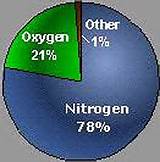
Earth's atmosphere is made up of nitrogen, oxygen, carbon dioxide, water vapor, and many other gases, as well as particles of liquids and solids. Below you will see a pie graph that shows what part of the atmosphere is made up of each type of gas.
Earth's atmosphere makes conditions on Earth suitable for living things. Living things need warmth and liquid water. By trapping energy from the sun, the atmosphere keeps most of Earth's surface warm enough for water to exist as a liquid. In addition, Earth's atmosphere protects living things from dangerous radiation from the sun. The atmosphere also prevents Earth's surface from being hit by most meteoroids, or rocks from outer space
Layers of the Atmosphere
